

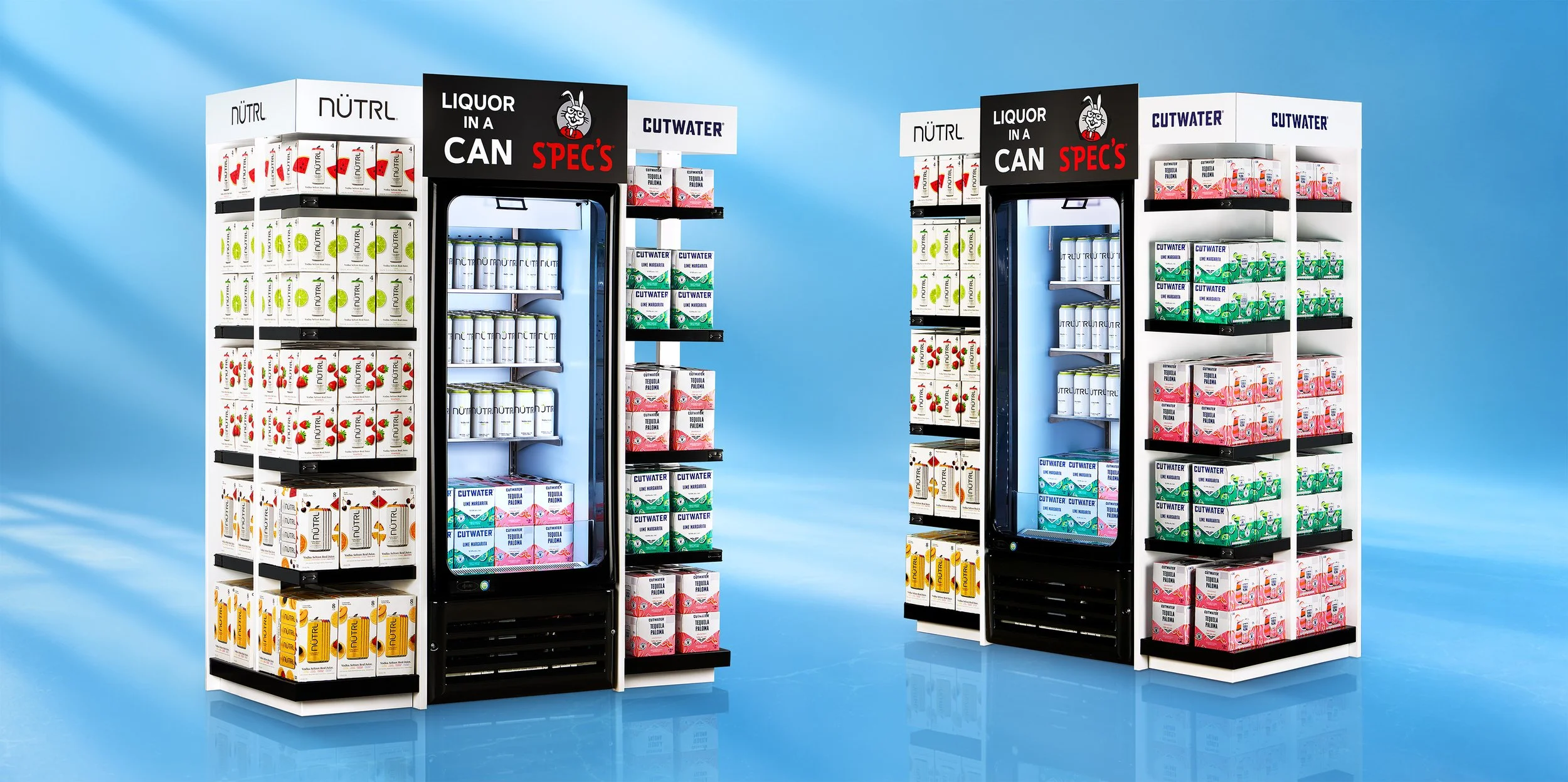
A display arrives at a store in a box, and somebody has to build it between two other jobs. That's the last step in retail design. It's also the one every earlier step should be designed around.
Most programs don't work that way. They run the order that feels natural. Concept, then design, then somebody figures out how to build it, ship it and get it past the retailer.
It's a comfortable sequence. It's also why good ideas end up in a warehouse. Here's the order we use instead.
Start at the floor
Before anyone draws anything, we want to know where this lands. Which retailer. Which format. Endcap, floor unit, counter, or a strip on the shelf edge. What the store allows, how much space it gets, who's building it.
Retailers have rules. Distributors have pallet dimensions. Store teams have a shift to finish. None of that is a detail to settle later. It's the brief.
Design against the constraints, not after them
Our designers and our structural team work at the same time, not in sequence. While one develops the idea, the other is asking whether it survives a warehouse, a forklift and a few hundred shoppers.
That sounds like it narrows the creative. In practice it does the opposite. A constraint you know about on day one is a design problem. The same constraint on day forty is a compromise.
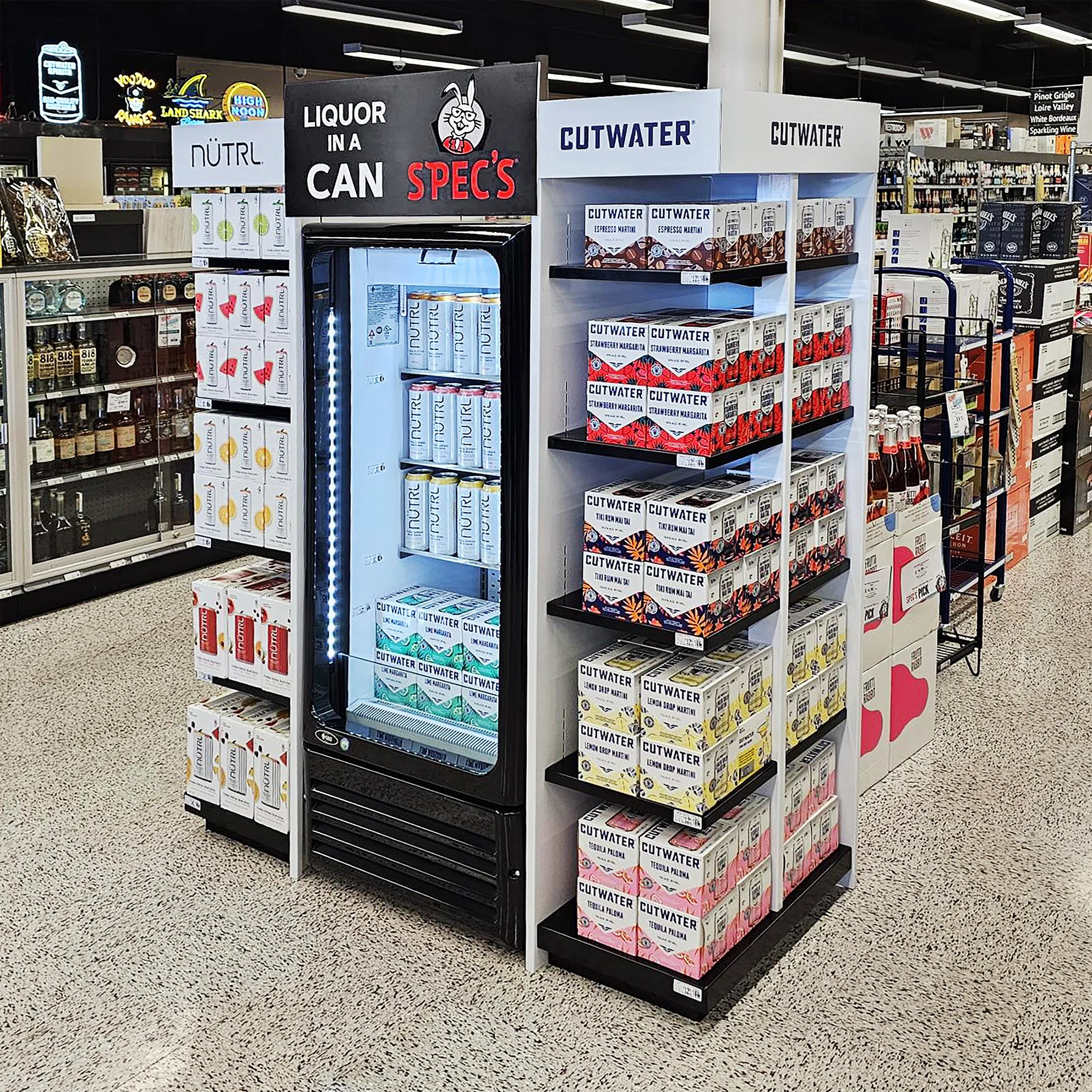

Prototype before you fall in love
A render can't tell you whether a shelf sags under a full product load. A physical prototype tells you in about ten seconds.
Build it. Load it. Knock it. Pack it and unpack it the way a store team will. It's the cheapest step in the process and the one most often skipped.
Design the build, not just the display
Then we work backwards through everything that happens after approval. Packing. Freight. The distributor's warehouse. The back room. The build itself.
We aim for a five to ten minute build, with instructions an associate can follow without stopping. Because a display that creates work is a display that risks staying in the back room.
Then find out whether any of it happened
The last step is the one most programs skip. Did it reach the floor? Was it built correctly? Was the right product loaded? Is it still standing in week six?
Without that, you've got a process that ends at approval and a program you can't defend when someone asks what the money bought.
Design the last step first. The rest of the order follows.
You review, we revise. In person, over video, by email, whatever gets you a clear answer fastest. The goal isn't more rounds. It's the right round.
Approval and Production
Meta description — 133 characters
Most retail design runs concept first and build last. We run it backwards, starting at the store floor. Here's the order, step by step.
It Happens Here.