

7 Benefits of POP Displays in Retail Stores
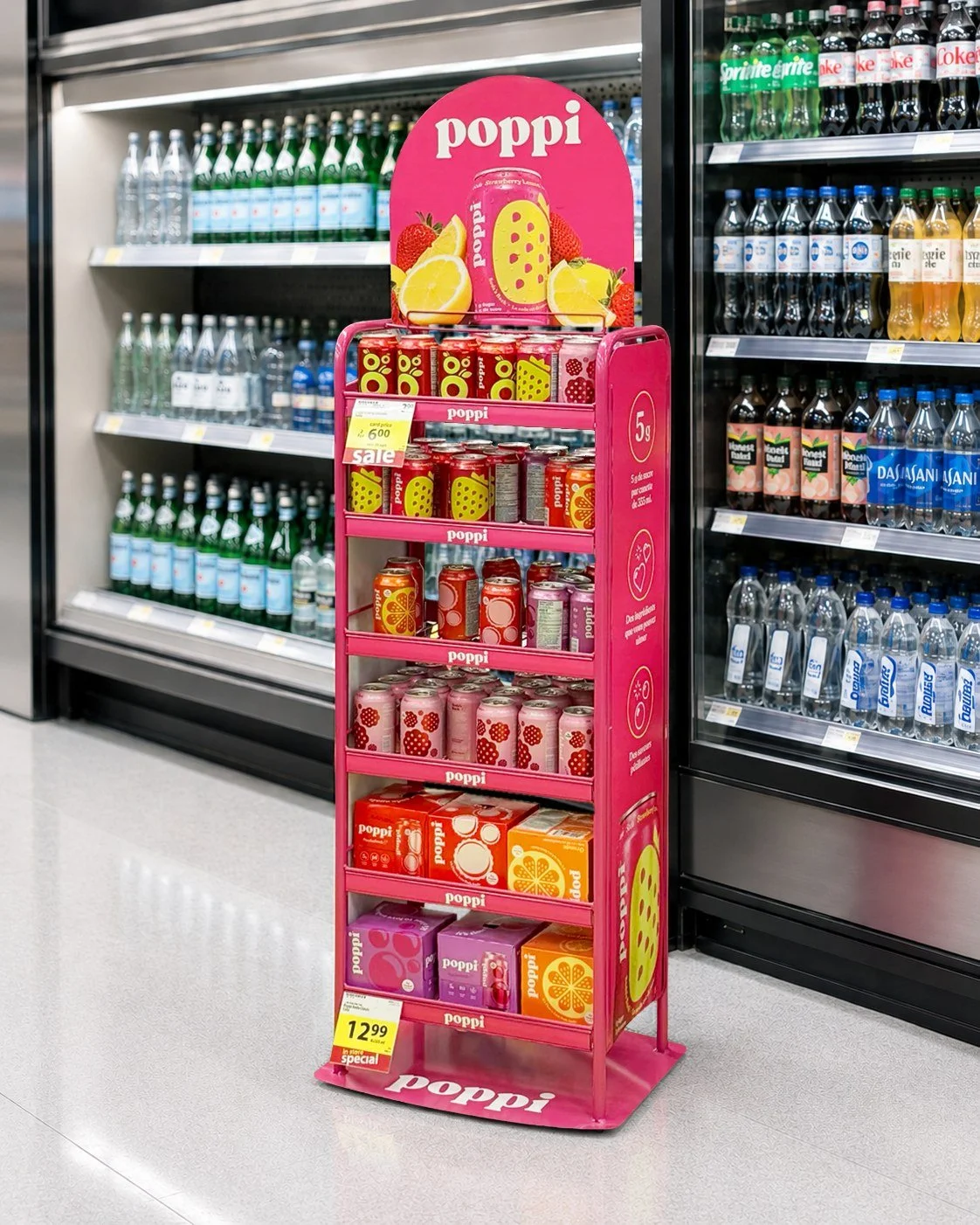
Point-of-purchase displays turn undecided shoppers into buyers by putting a brand in front of them at the exact moment they're choosing. Most shoppers don’t arrive at a store with every decision made.
They might know they want tequila. They probably don’t know which tequila. They might have seen three brands on Instagram, passed another on the way into store and vaguely remember an ad from last week.
Then they hit the aisle.
That moment between intention and choice is where POP earns its keep.
POP means point of purchase. POS means point of sale. We use both. But the acronym isn’t particularly interesting. The opportunity is.
A shelf facing gives you a place in the category. A great POP display gives you another opportunity to be noticed, understood and chosen — often somewhere your competitors aren’t.
So what is that extra moment worth?
1. It intercepts decisions that are still open
Retail media can influence the trip. Brand advertising can build familiarity. But plenty of decisions remain undecided until the shopper is standing in front of the product. POP operates at the point where awareness has to become action.
2. It gives unfamiliar brands a fighting chance
Established brands have recognition working for them. New and challenger brands don’t. A display can interrupt autopilot long enough to answer the shopper’s first question: why should I look at this?
3. It gets you out of your aisle — and into an occasion
Secondary placement isn’t simply more space. Done properly, it changes the context in which a product is discovered. Tequila beside summer entertaining. Snacks near lunch solutions. Functional drinks around fitness. Suddenly you’re not just competing within a category; you’re attaching yourself to a reason to buy.
4. It turns retail media into retail action
Retail media networks are getting very good at reaching shoppers before and during a trip. But an impression isn’t a purchase. The physical store still has to finish the job. Great POP creates the bridge between I’ve seen that and I’ll have that.
5. It gives the brand room to explain itself
A shelf label is tiny. A pack can only work so hard. Ingredients, benefits, certifications, provenance, serving occasions and product education all need space. POP gives brands a surface on which to make the case — quickly.
6. It makes execution visible
Retail is full of things that were supposed to happen. Displays make execution tangible. Where did it land? Was it built correctly? Was the right product loaded? Is it still there? With the right compliance process, those questions can be answered with evidence rather than assumption.
7. It creates another conversation with the retailer
Seasonal and promotional displays give brands a reason to come back to buyers with something new: another occasion, another campaign, another piece of shopper insight. The best programs don’t just generate incremental space. They demonstrate why a brand deserves more of it.
But here’s the bit that gets overlooked
None of those seven benefits matter if the display never makes it onto the floor.
And in our experience, that’s where a lot of POP programs actually succeed or fail.
Not in the creative presentation.
Not in the render.
In execution.
Can a rep build it quickly without instructions the size of a newspaper? Does it fit the retailer’s requirements? Can it survive manufacturing, packing, shipping, the distributor’s warehouse and the final journey into store? And, critically, does it arrive while the promotion still matters?
Because reps are working a route. A display that creates work is a display that risks staying in the back room.
That’s why at Main St. we design backwards from the floor. We aim for a five-to-ten-minute build, execution compliance above 85% and speed to shelf under ten days.
Creative gets the attention.
Engineering gets it built.
Execution gets it onto the floor.
And that’s where it starts working.
It Happens Here.